
January Is National Train Your Dog Month
January is National Train Your Dog Month, started by the Association of Professional Dog Trainers (APDT) International. This month is a great reminder that training isn’t just about teaching cues, it’s about helping our dogs learn how to successfully navigate our weird human world.
The Benefits of Training
Training can support your dog in many important ways, including:
Teaching your dog the skills they need to be successful both in the home and out in public
Fulfilling their social, mental, and physical exercise needs, which can lower the chances of behavioral issues coming up
Building a stronger relationship between you and your dog
Training Is More Than “Sit” and “Stay”
When we think about training, it’s easy to picture basic obedience cues. But training can include so much more than that. Some broad areas you can work on include:
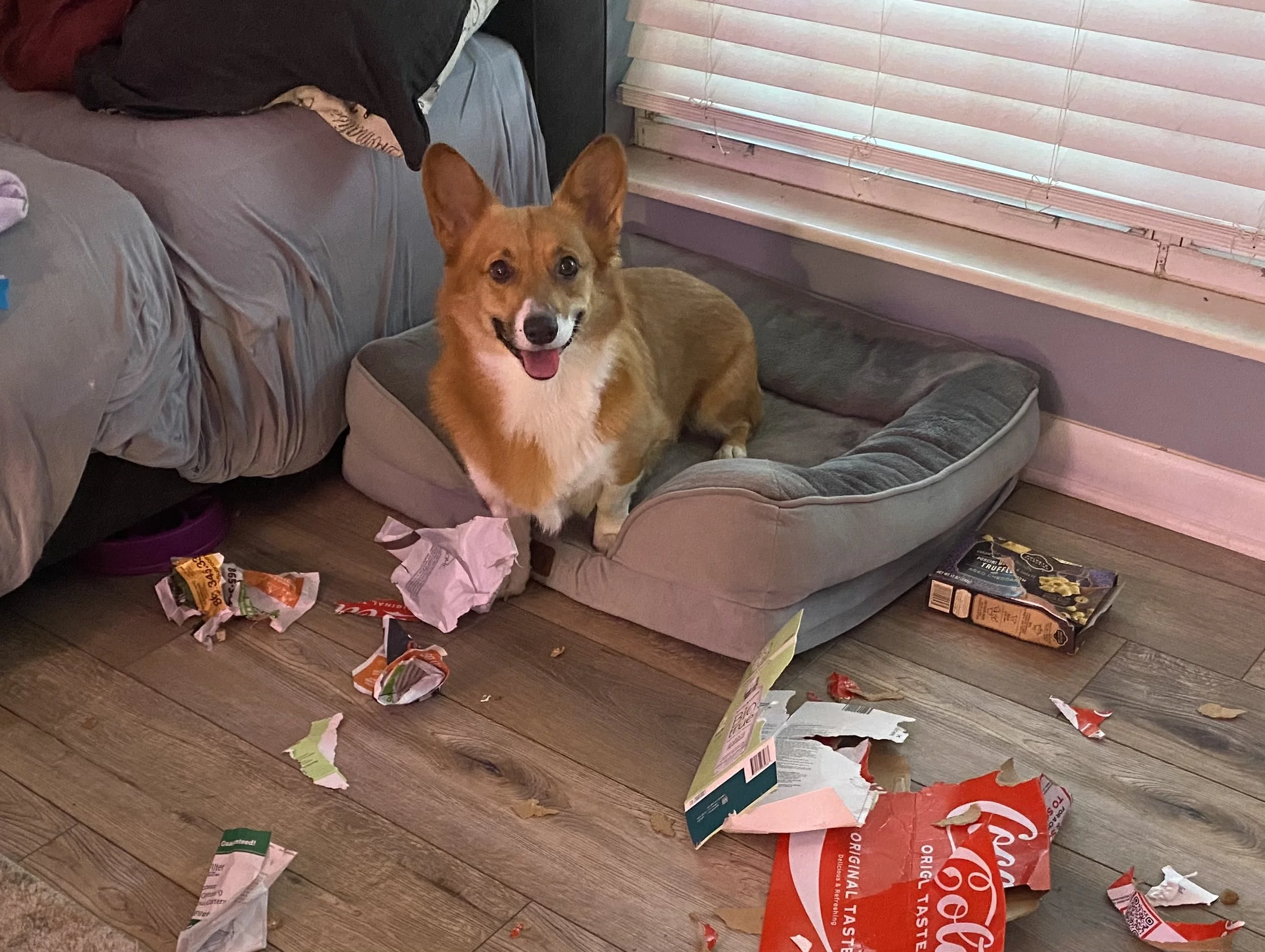
Tigerlily stations on her dog bed waiting to see if I'll give her more shreddable goodies.
Communication & Choice
Different ways for your dog to ask you for something
Checking in with you
Acknowledging that you are still there
Movement & Safety
Coming back when called
Moving away from things that bother them (stressors)
Moving from location to location
Stationing
Practicing skills in different places
Emotional Skills
Self-regulation after encountering a stressor and to increase rest throughout the day
Problem solving to encourage mental exercise
Independence
Confidence
Building a Training Plan That Works for Your Dog
There are many different ways you can train a new behavior or skill. The first step is deciding your end goal.
Ask yourself:
What do you want your dog to do?
In what contexts and scenarios do you need this behavior?
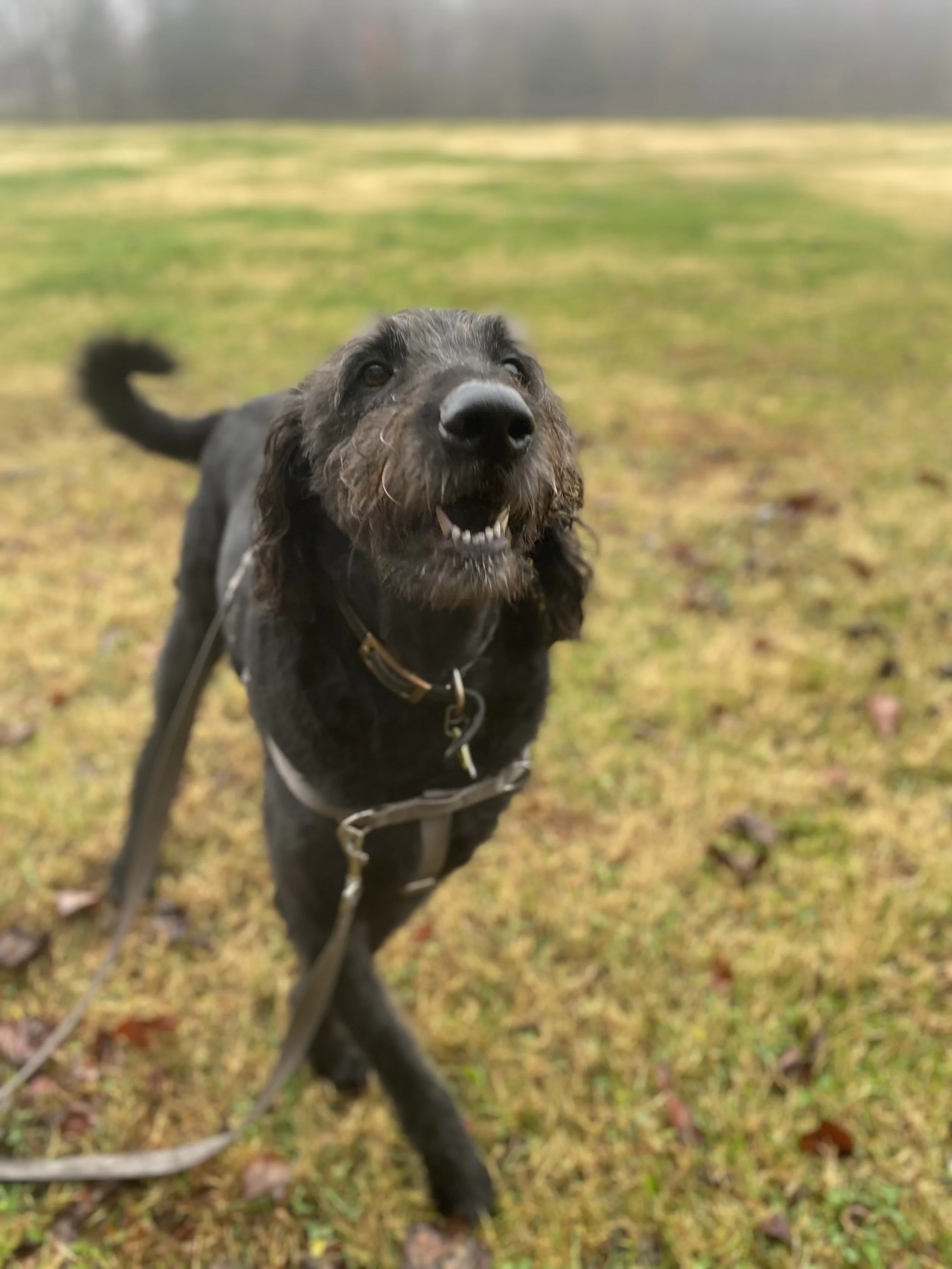
Webster does a check-in with me while doing a session at our local park.
Next, look at the environment where you need the behavior and what your dog is capable of doing now and what could be possible later.
For example, you might have a dog who is uncomfortable with guests in the home, so you’d like them to move away from people. You might decide you want them to go upstairs, but they are entering their geriatric years and stairs are becoming difficult or painful. Instead, is there a place downstairs they could retreat to where they won’t be bothered by guests and won’t cause them discomfort?
Once you’ve determined your goal and what’s possible, you can start building the foundations of your training plan.
Foundations You Can Start Right Away
These are some foundational skills you can begin working on immediately.
Checking In With You
Place small treat jars around the house (out of reach of your dog)
Throughout the day, any time your dog looks at you-whether you ask or not-go to the jar and toss them a treat
Aim to capture multiple check-ins throughout the day
Tip: You can also do this on walks. Each time your dog turns around to look at you, give them a treat.
Stationing
Choose a place you want your dog to use as a station- a spot that doesn’t move and that they can go to in different scenarios
This could be a blanket, dog bed, crate, or even a specific room
Start by feeding their meals on the station
Throughout the day, place calming projects like bones, lick mats, or puzzle feeders on there to increase its value
Tip: Place the station in an area that is not a high-traffic part of the house.
Moving Away From Stressors
Place small treat jars around the house (out of reach of your dog)
Throughout the day, call your dog to come with you as you walk around the house
While walking, gently change direction toward a treat jar and encourage your dog to follow you, then grab a treat and feed them
On walks, start adding simple U-turns, encouraging your dog to come with you as you turn around and go the other direction.
Problem Solving
Use puzzle feeders, either store-bought or homemade: Here are some examples
Try activities like 101 Things to Do With a Box to encourage exploration and mental exercise.
Keep It Simple and Consistent
I like starting with these foundations because they’re easy to add into your day. We live busy lives and don’t always have time for separate training sessions.
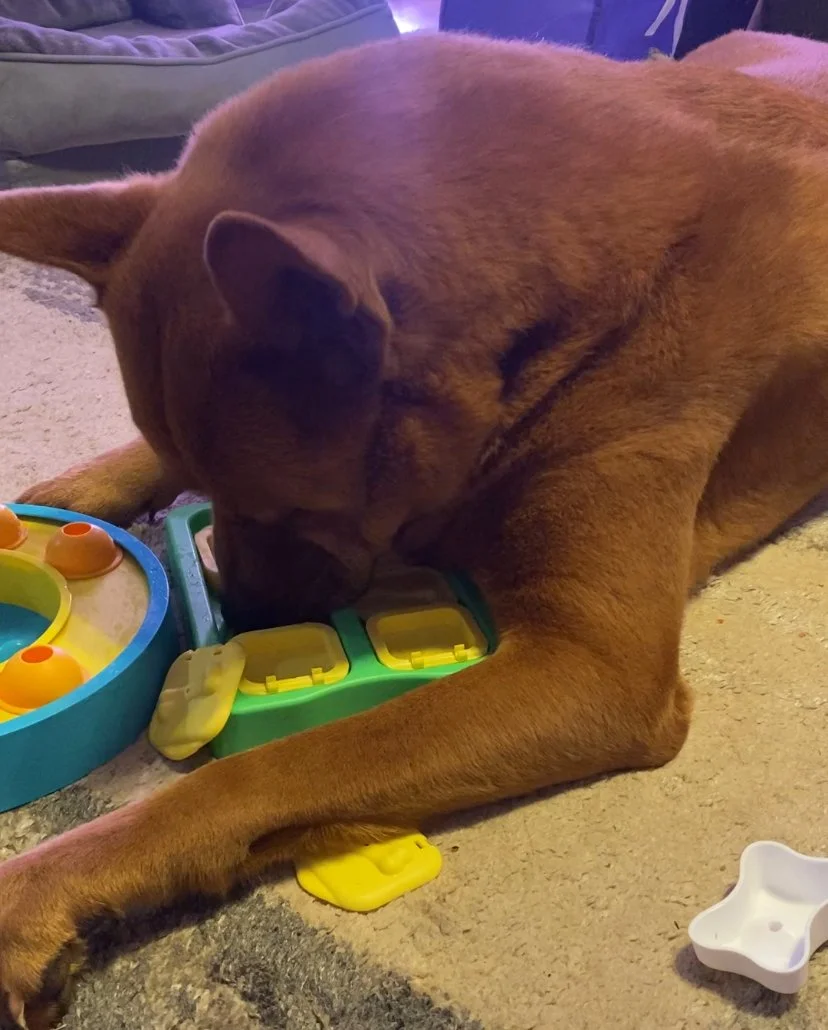
Sully nose deep in one of the many puzzle feeders he was engaging with.
Try to practice these skills at least once a day for a couple of weeks before moving on to the next step in your training plan.
Not Sure Where to Go Next?
If you need help building and implementing a training plan for dogs with reactivity, stranger danger, over-arousal, or other nuisance behaviors, I’m here to help.
Check out my Private Coaching Services to get started today.
Hi! I’m Beccy and I’m a professional dog trainer with almost 15 years of animal training experience. I use positive reinforcement and fear-free methods to help dogs and their humans build skills, confidence, and lasting behavior change. My goal is to create a stress free life for you and your dog. I offer in-home training in Maryville, TN and surrounding cities throughout Blount, Sevier, Knox, and Loudon Counties. Online training is available for clients outside of East TN.
