Learning Dog Body Language: How to Understand What Your Dog Is Saying
Learning a New Language: Understanding Dog Body Language
There are over 7,000 languages spoken around the world today, along with countless courses, apps, and programs designed to help us learn how to communicate in many of them. But one language we don’t often see courses for is the language our dogs use every day to communicate with us.
Just like humans, dogs don’t just communicate with vocalizations, but by a visual language as well. Body language is their primary form of communication. Every part of their body plays a role in the conversation, from their eyes, mouth, and ears all the way down to their tail. Hint: not every wagging tail is a happy tail.
You’re probably reading this because dogs are part of your life- whether you have one (or more) now or are thinking about getting one. Learning to “speak” their language is incredibly important if you want to build better relationships with the dogs you live and interact with. By taking a deeper look at dog body language, you can begin to understand what your dog is trying to say and respond to their wants and needs more effectively.
When trying to figure out what your dog is communicating through their body language, it’s important to look at individual body parts- the head, body, and tail- and then zoom out to look at the whole dog. Context matters. Take a moment to look around and notice what’s happening in the environment that may be influencing the behaviors you’re seeing.
It’s also important to remember that learning body language isn’t one-size-fits-all. Different breeds and body types can make reading signals more challenging. Human interventions, such as cropped ears or tails, can make communication even harder for both dogs and humans.
Finding Your Dog’s Baseline
To start learning what your dog’s body language means, you first need to establish a baseline. A relaxed or resting dog is a great place to begin. Next time your dog is just chilling, take note of what each body part looks like when they’re calm and comfortable.
Ask yourself:
Do their ears naturally stand up or hang low?
Does their tail (if they have one) loop up, stand straight, or hang low?
Is your dog shaggy or short-coated? Fur type can affect how easily you can see their eyes, mouth, or muscle tension.
Once you know what your dog looks like in a neutral state, you can start observing those same body parts as they move through their day.
Dog Body Language Signals to Look For
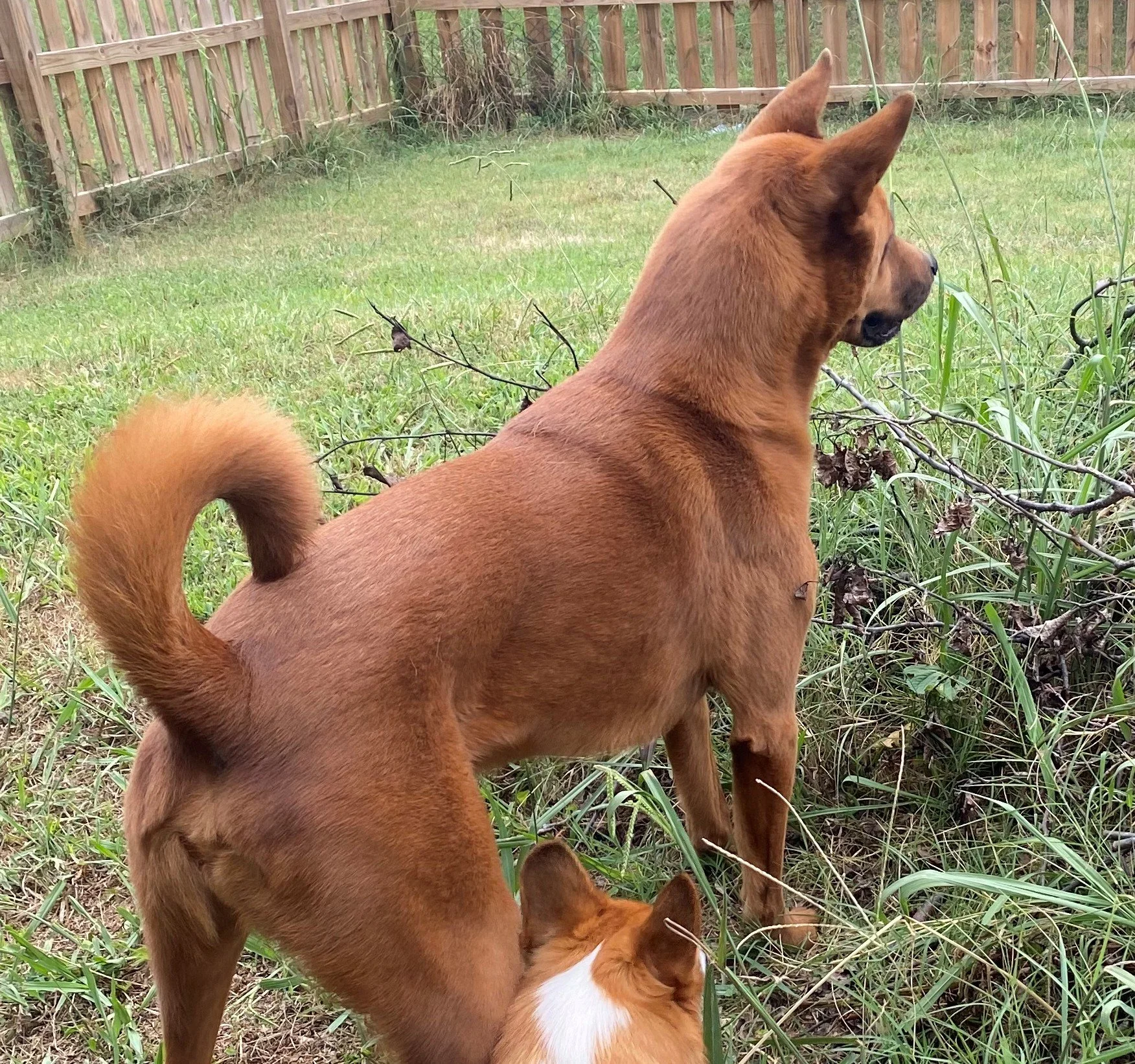
Sully standing up tall with his tail high and looped. His ears are turned forward and he's looking directly at a bush with a critter hiding inside. Notice how he isn't standing square on all four legs and that his mouth is slightly open showing a tight c-curve in his lips.
Head & Face
Eyes: soft blinking vs. hard staring, or whale eye (seeing the whites of the eyes)
Ears: neutral, alert and forward, or pinned back against the skull
Mouth: closed (loose or tight), panting (tongue hanging out or pulled back), teeth showing
Body & Posture
Muscle tension
Standing tall vs. hunched low
Center of gravity (leaning forward or back)
Bowing and wiggly movement
Curving or arcing
Tense and still
Tail
Height relative to the spine
Movement: fast, stiff wagging vs. slow, loose, squishy movement
As you begin to notice these signals, start looking at what’s happening around your dog that may be causing them. This helps you determine whether your dog is having fun or having a hard time and trying to cope.
Signs of Stress and Discomfort in Dogs
Muscle tension
Hard staring or whale eye
Ears pinned back
Tail tucked low or stiff, fast wagging
Mouth tightly closed or pulled tight with teeth showing
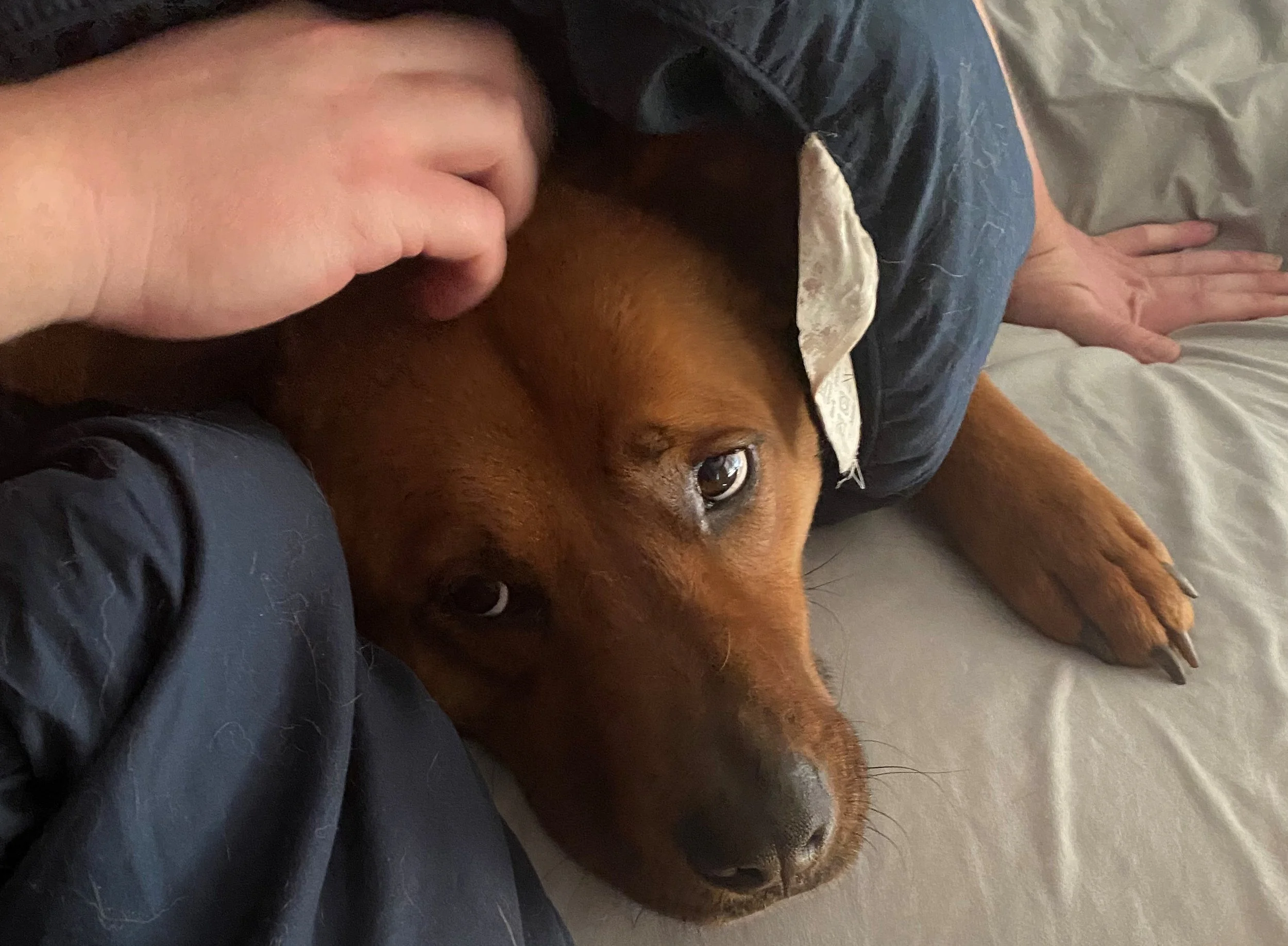
Notice the slight whale eye Sully has here. He is laying down facing forward, but his eyes are looking up at the person leaning over him to pet his head.
Some additional coping behaviors include:
Nose licking
Yawning
Turning away
Sniffing out of context
Sitting or lying down
Paw lifts
Shaking off when not wet
Playful and Relaxed Dog Body Language
Loose, wiggly body movement
Relaxed mouth that may look like a “smile,” with the tongue lolling
Bowing (play bows)
Soft, blinking eyes
Big, flowy, exaggerated tail movements
Dogs communicate very quickly through body language, and many of their signals are subtle. As humans, we often miss the early parts of the conversation. Behaviors like growling or biting rarely come out of nowhere- they’re often the end of a long conversation we didn’t realize we were missing. By learning to recognize the earlier signals, we can help prevent confrontations later on.
Even play can shift into an uncomfortable conversation if we aren’t checking in. Taking breaks during play, whether you’re playing with your dog or dogs are playing together, helps keep play fun and safe for everyone.
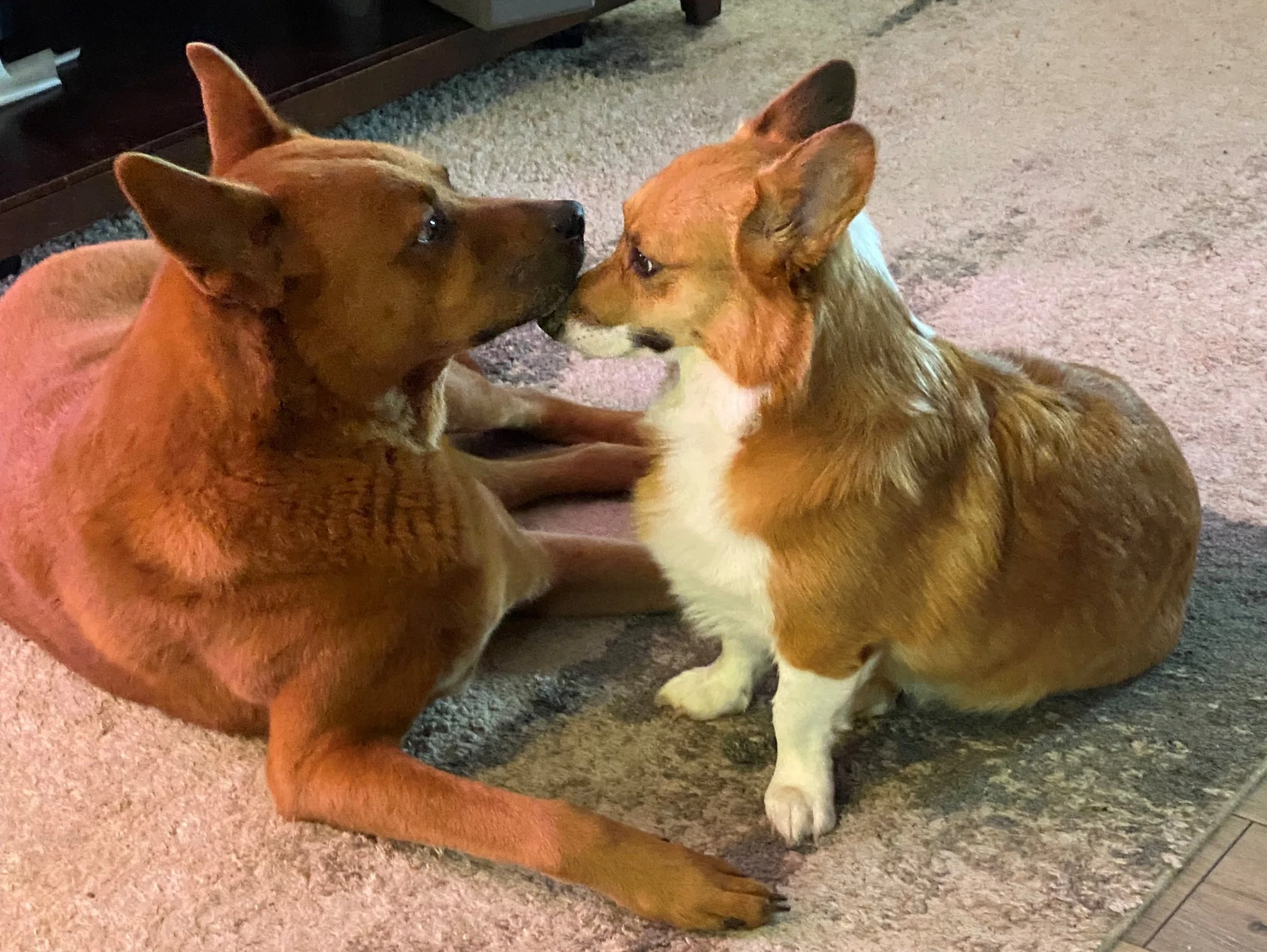
How many different signals do you see happening here? Look at each dog's eyes, ears, mouth, and body posture. This is where context really matters! For many dogs this photo could be showing something bad about to happen with all that tension. But for Sully and Tigerlily this is a daily routine where they get close do some short slow interacting and then go about their own businesses. We can't know exactly what they're conversation means, but it's communication with each other nonetheless.
How to Practice Reading Dog Body Language
One of the best ways to learn this language is through observation.
Try this:
Take videos of your dog in everyday situations
Don’t put your dog in a stressful situation just to capture footage
Watch videos with the sound off
Slow them down to 0.5x or even 0.25x speed
At first, simply note what you see — don’t try to interpret feelings right away
As you get better at noticing body language in videos, you’ll start to recognize it in real time. This allows you to be proactive, help your dog stay comfortable, and meet their needs before behavior escalates into something unsafe.
Learning a new language takes time and lots of practice. Learning happens through repetition, and you won’t always get it right and that’s okay. The more you practice, the better you’ll get, and your dog will thank you for it.
Next Steps
If you want help learning dog body language, especially if your dog is already struggling, you don’t have to do it alone.
Reach out today, and we can start building communication skills for you and your dog together.
Hi! I’m Beccy and I’m a professional dog trainer with almost 15 years of animal training experience. I use positive reinforcement and fear-free methods to help dogs and their humans build skills, confidence, and lasting behavior change. My goal is to create a stress free life for you and your dog. I offer in-home training in Maryville, TN and surrounding cities throughout Blount, Sevier, Knox, and Loudon Counties. Online training is available for clients outside of East TN.
