The Importance of Sniffing for Dogs And Easy Enrichment Ideas
Sniffing: Your dog’s version of social media
Have you ever taken your dog for a walk and noticed them zig-zagging with their nose glued to the ground, or they just stop and investigate a spot that they just can’t leave?
In both those scenarios your dog was in the middle of gathering information and processing the environment around them. Just like we use our eyes and ears to scroll through social media or check the news headlines, our dogs use their noses to stay up to date on what’s happening in their world.
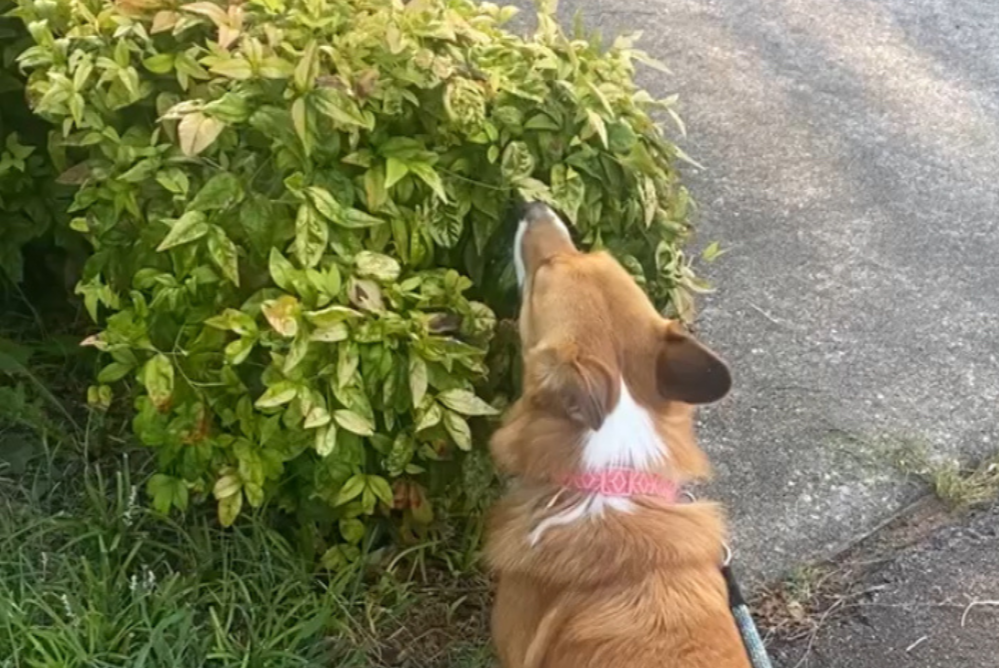
Tigerlily the corgi stops to sniff a popular bush in the neighborhood.
A dog has between 100 and 300 million scent receptors in their nose. Humans-we have a measly 5 million. A dog’s scent receptors are able to constantly take in information both past and present. This allows them to know who or what has been in a particular area and who or what is nearby at that very moment.
Sniffing: The most available tool for dogs to chill out
Learning about their environment isn’t the only thing sniffing is good for. It also makes dogs feel better. Research has shown that it allows dogs to complete their stress response cycle (which brings them down from their high arousal jumpy barky lungey state of mind).Whether tracking a particular odor (think working dogs), sniffing while foraging for food, or investigating different odors in their environment, sniffing helps promote problem solving and coping strategies.
They have found that it also can reduce cortisol levels (the stress hormone). By reducing stress levels and encouraging coping skills you have a dog that displays less stress related behaviors and increases rest and relaxation time.
Sniffing ideas for every nose
The easiest way to get started? LET THEM SNIFF (as long as it’s safe** to do so)! Here is a list of fun ways to add sniffing into your dog’s day (click on the links to see some of the options in action!). Some are interactive-allowing you to build a social bond while doing mental and physical exercises. Some options are “set it and forget it” for the busy human that needs to keep their dog occupied while they do boring human stuff.
Sniffari’s-visit an open space or local Sniffspot to let your dog lead the exploration
Scatter feed or “Find It” games- Tossing kibble or treats into a snuffle mat, around the house, in the yard
Snufflebox-A box or bin filled with paper, toys, and treats for your dog to dig through
Scented blankets- Use dog safe essential oils or herbs and spices on old blankets and towels. You can even leave blankets outside overnight and let nature do the work or ask a neighbor to take a blanket and let their pets sleep on it (which is a bonus for BOTH families)
Treasure hunts- Use puzzle feeders, empty containers, or empty boxes for meal time and place them around the house. Start with easy spot then increase the difficultly
Hide and seek-Hide their favorite toy, treat, or person!
Join a Nosework or Barn Hunt class-Good for those that want to be around others!
Finding what works for your dog
Enrichment isn’t one size fits all. It’s all about observing and communicating with your dog to figure out what they like and don’t like, and what activity meets their needs and your goals.
For example if I want my dogs to burn some energy and get their physical needs met along with the sniffing I’m going to do a sniffari walk or hide and seek in the house. But if I want them to start to chill out after a game of fetch or when guests come over I’m gonna do a scatter feed in the yard or in a snuffle box away from the commotion.
You might also find that some of the activities are so new to your dog that they don’t understand what you want them to do. So start easy and as they get more comfortable you can start to increase the difficulty.
**Safety First
Safety should always be top priority!
Be aware of your surroundings and your dog's tendencies while letting them sniff. Only allow them to explore in areas that are safe for both of you to enter.
If your dog has a habit of eating inedible objects choose an option that doesn’t incorporate food around the things they shouldn't eat.
If you have a resource guarder please do the activities in a well managed area so your dog doesn’t feel the need to guard their items. This might be in another room away from other pets or humans, or maybe not even that activity at all.
Make sure essential oils, herbs, and spices are all safe for your pet to interact with.
So next time your dog is sniffing that bush everyone pees on, give them a moment then as you walk away ask them what the local gossip is today.
If your dog struggles with reactivity, stranger danger, or over arousal sniffing can help them complete their stress response cycle, but it’s just one piece of the puzzle. If you’re needing help putting the pieces together, reach out today and we can make a plan together!
Sniffing isn’t just fun. It’s backed by science!
As a positive reinforcement dog trainer who uses science-based methods, I look for research to support the information I give to my clients. Inspiration for this post came from a paper published in the journal Applied Animal Behavior Science. You can read the full study here: The value of sniffing: A scoping review of scent activities for canines.
Hi! I’m Beccy and I’m a professional dog trainer with almost 15 years of animal training experience. I use positive reinforcement and fear-free methods to help dogs and their humans build skills, confidence, and lasting behavior change. My goal is to create a stress free life for you and your dog. I offer in-home training in Maryville, TN and surrounding cities throughout Blount, Sevier, Knox, and Loudon Counties. Online training is available for clients outside of East TN.
