
It’s Okay to Leave Your Reactive Dog at Home
Note: If your dog panics when left alone, nonstop barking/howling/pacing, has an inability to settle, and destructive behavior either to themselves or the house they may have separation related distress. Please reach out to a behavior consultant for help as soon as possible.
You are a social butterfly. And you imagined life with your dog to be filled with adventures like weekend markets, dinner patios in nice weather, and long walks at the park. Yet your reality is a dog that is barking, lunging, trembling, and you have a hard time holding them back. You’re embarrassed because people are staring at you and might be judging you and your “bad dog.” You’ve resorted to using methods like yanking on the leash or yelling and they aren’t working to get your dog to stop and it also doesn’t make you feel good to treat your dog this way.
You feel bad about leaving your dog home alone (or maybe you have multiple dogs and you feel bad just taking one) but going out all together is also draining your mental cup.
For many dogs the answer isn’t more outings. Leaving them at home can be the best solution for all of you.
Socializing with your dog
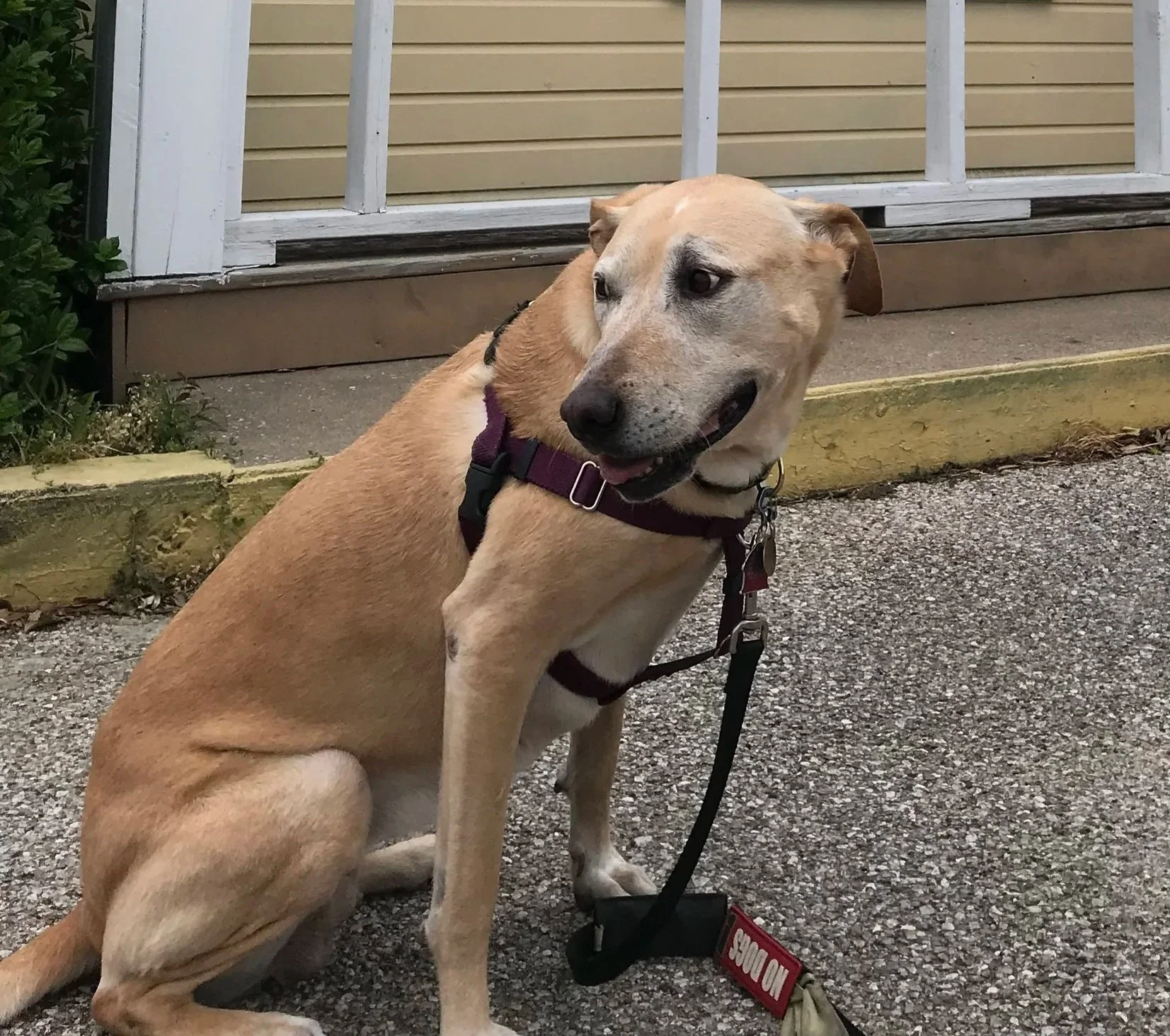
Here you can see the body language signals (ears pulled back, tongue tight in mouth, looking one direction while body is facing the other direction) that Cora is displaying suggesting she was uncomfortable out in public.
It might be true that your dog needs some socializing time to fulfill their needs. But that doesn’t always mean they need to leave the house to do so.
Think about what you want your dog to do while you are out socializing. If they are actively engaging with their surroundings, like running around with other dogs, playing with people., then they are being involved in the activity and it can be fun for all. But if they are standing, sitting, or lying down next to you while you are shopping, eating, or chatting with the people around you-they might not be enjoying themselves as much.
For dogs who have a hard time with lots of movement, loud noises, people, and other dogs, being restricted in any form can make them even more uncomfortable. You could also be too distracted to notice the microsignals your dog might be giving off that communicate they want to get out of there.
I’m here to say…it’s OKAY to leave them at home.
Ask yourself, should I bring them along?
Before your next social outing, let’s consider the details.
Where are you going?
How long will you be out?
What is the environment most likely going to be like (sights, sounds, smells, space)?
What will your dog need to do while you are there?
Then think of your goals of bringing your dog. You might ask yourself these questions
Have they been to this place before and did they enjoy it? How do you know?
What is their normal routine? Are they super energetic and need lots of movement, or do they spend most of their day just laying around? Can they do these things at the place you are going?
Does your dog know how to communicate to you they’ve had enough-and do you know how to respond?
The answers to these questions can help you decide what is the best choice for everyone involved.
Leaving your dog at home
It’s okay to be sad or disappointed if your dog can’t tag along with you. Those feelings are valid-especially if that’s the life you envisioned. But knowing your dog is much happier at home can hopefully ease some of that guilt.
For dogs who have a hard time in public it’s probably best to leave them at home. That doesn’t have to be a forever choice. By making time to work on the skills to make fearful and anxious dogs to cope better in higher stressed environments, you could eventually do these social outings together.
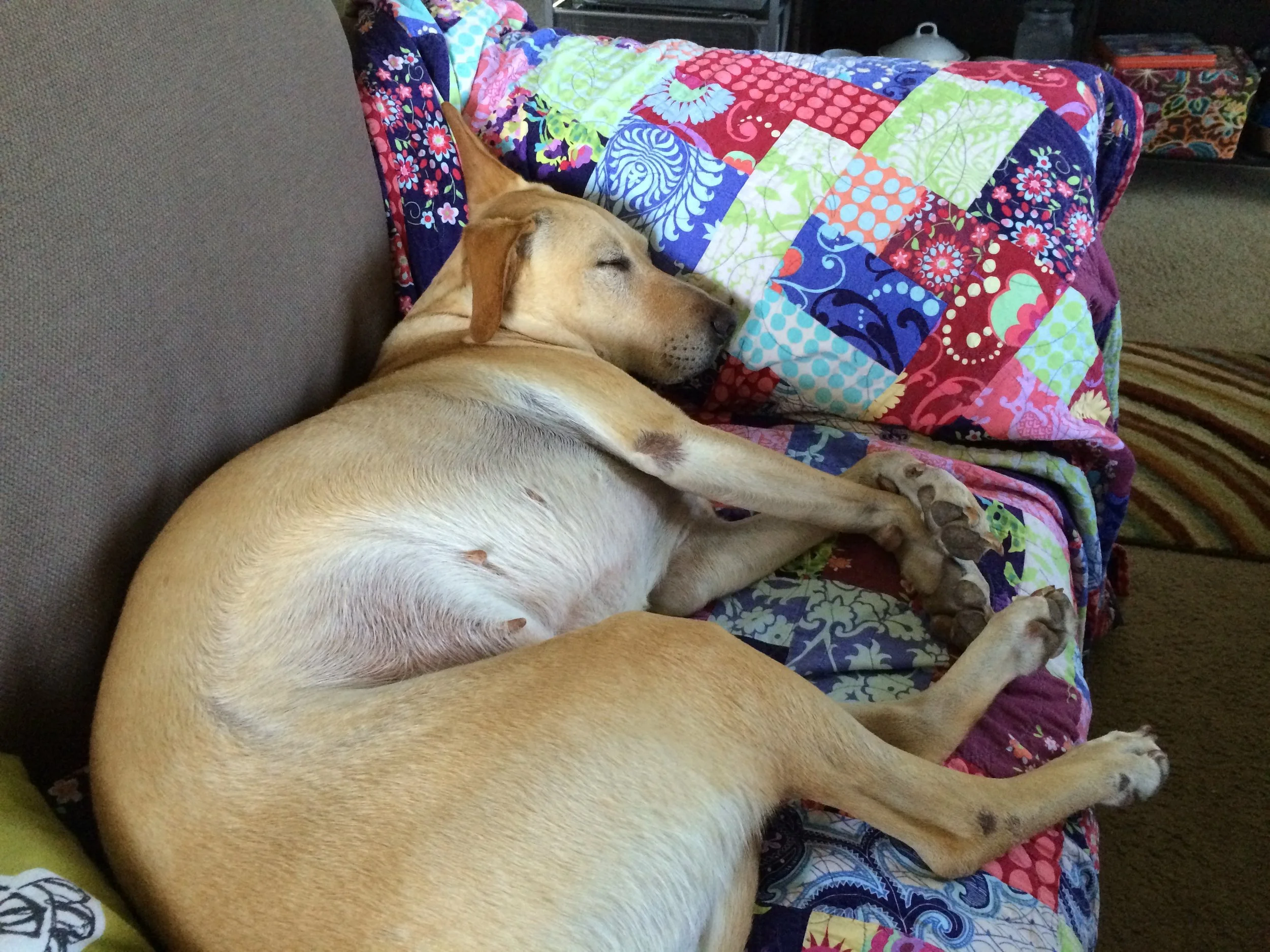
Cora definitely preferred to nap on the couch then go out to public spaces.
If you’re worried they’ll be “bored” at home, you can set up activities (like treasure hunts) for them to do while you’re gone. This can look like hiding different calming activities around the house, like snuffle mats, lick mats, puzzle toys, etc.
Dogs who have to stay confined such as in a crate, you can give them a few safe toys and chews to work on in the crate.
To be honest, they are probably going to spend most of their time sleeping or resting. If your dog is unable to settle or relax when you are gone, that may be a sign to get support from a qualified behavior professional.
If you’re going to be gone for longer than 4-5 hours it is best to have a friend or dog walker come by and let them out for water and a potty break.
Letting your dog socialize
Still want to fill your dog’s social cup?
If they have dog friends-do a play date either at one of your homes or a local sniffspot
If they like other people-invite a couple of friends over for a dinner and game night (where one of the games is playing with your dog)
Spend time doing training, or teaching them a new game-so they get to socialize with you in a new way
By experimenting with these different ideas, it can set everyone up to have a great time, while also building a stronger bond between you and your dog.
Remember, if your dog isn’t having a great time out in public, you are also not going to have a great time! Set everyone up for success by leaving them at home. It’s okay to have time apart, and they will be so overjoyed when you do get home!
What’s next?
Whether you have a reactive dog that struggles out in public, a dog who struggles to be home alone, or a dog who bounces off the walls 24/7 it’s best to get a qualified behavior professional in to help you navigate the training. Reach out today and let me help you live a less stressful life with your dog!
Hi! I’m Beccy and I’m a professional dog trainer with almost 15 years of animal training experience. I use positive reinforcement and fear-free methods to help dogs and their humans build skills, confidence, and lasting behavior change. My goal is to create a stress free life for you and your dog. I offer in-home training in Maryville, TN and surrounding cities throughout Blount, Sevier, Knox, and Loudon Counties. Online training is available for clients outside of East TN.
