
Why Dogs Dig and How to Stop It.
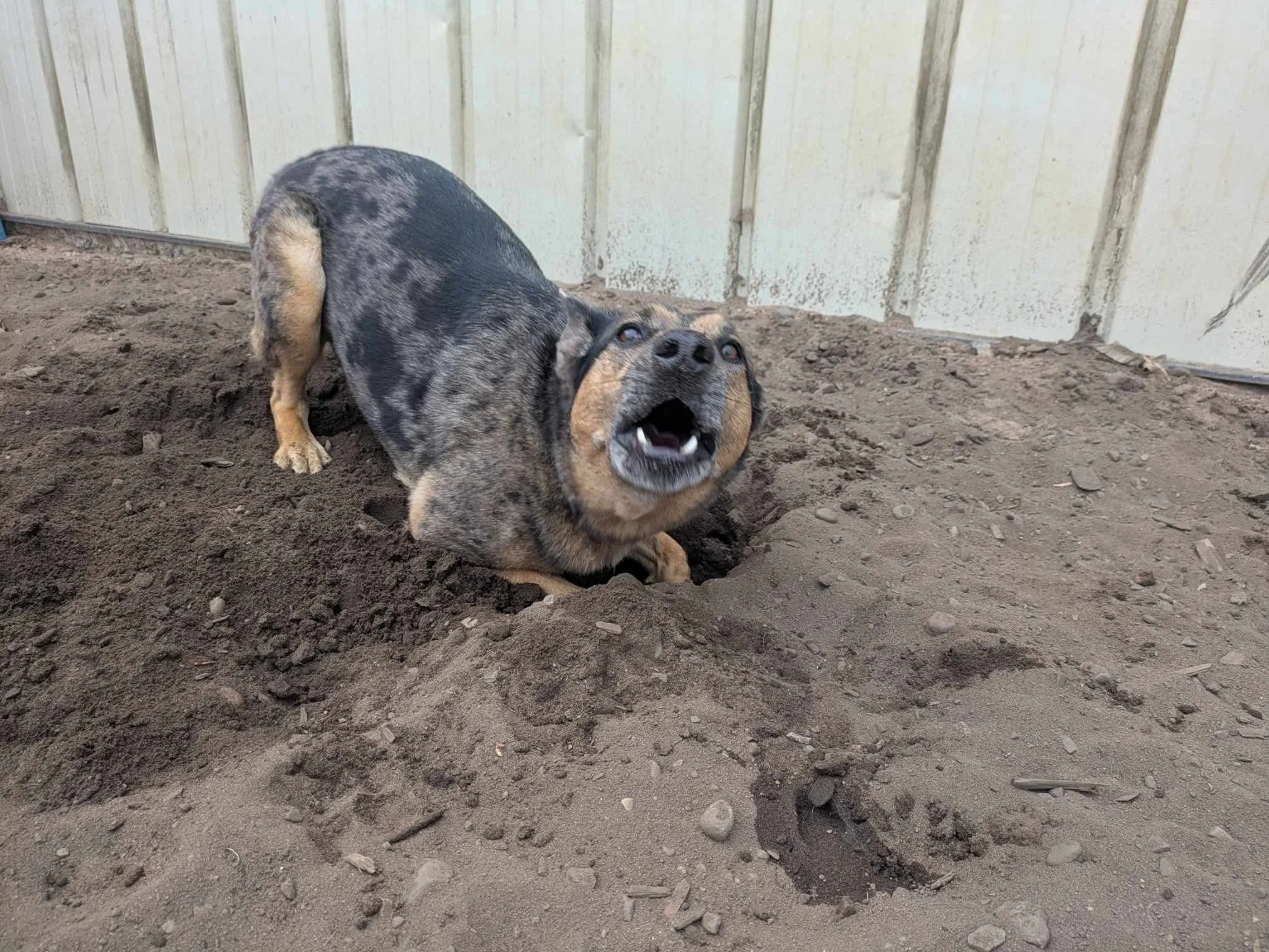
Morgan Lefeber's (DuBay Dog Training) dog Pluto pauses to bark mid dig!
Is your dog digging ankle-breaking holes in your yard, or ruining your furniture as if they are trying to get to the core of the earth? Yup, you guessed it…you’re not alone.
If you’ve worked with me, or even read some of my blog posts (like this one), you know that I’m big on trying to find ways for you to meet your dog’s needs. When we all have our basic needs (food, water, and shelter) met we are all better creatures. We call the overarching topic of meeting needs ‘Enrichment.’
Enrichment does cover more than just the basics. We are all complex creatures and we need more than just food, water, and a roof over our head. Things like medical, social, exercise, and species-typical (natural behaviors) are also needs that we all need fulfilled to be the best we can be.
Why Dogs Dig: Understanding the Behavior
Many of the species-typical behaviors our dogs do, tend to annoy or make us humans upset. Behaviors like barking, chewing, destroying, licking, sniffing, jumping, and of course digging are ingrained into who they are as dogs. Yet many times people seek out a trainer to stop these behaviors because they usually result in our stuff being ruined.
Which is totally fair. Dogs don’t understand the concept of money or that not everyone wants their big ol slobbery tongue near their face or in their ears.
If we know that fulfilling our dogs' needs can improve their welfare, then by finding ways for them to do dog things more appropriately can save you a lot of stress, and make them a better dog for it!
Five Common Reasons Dogs Dig
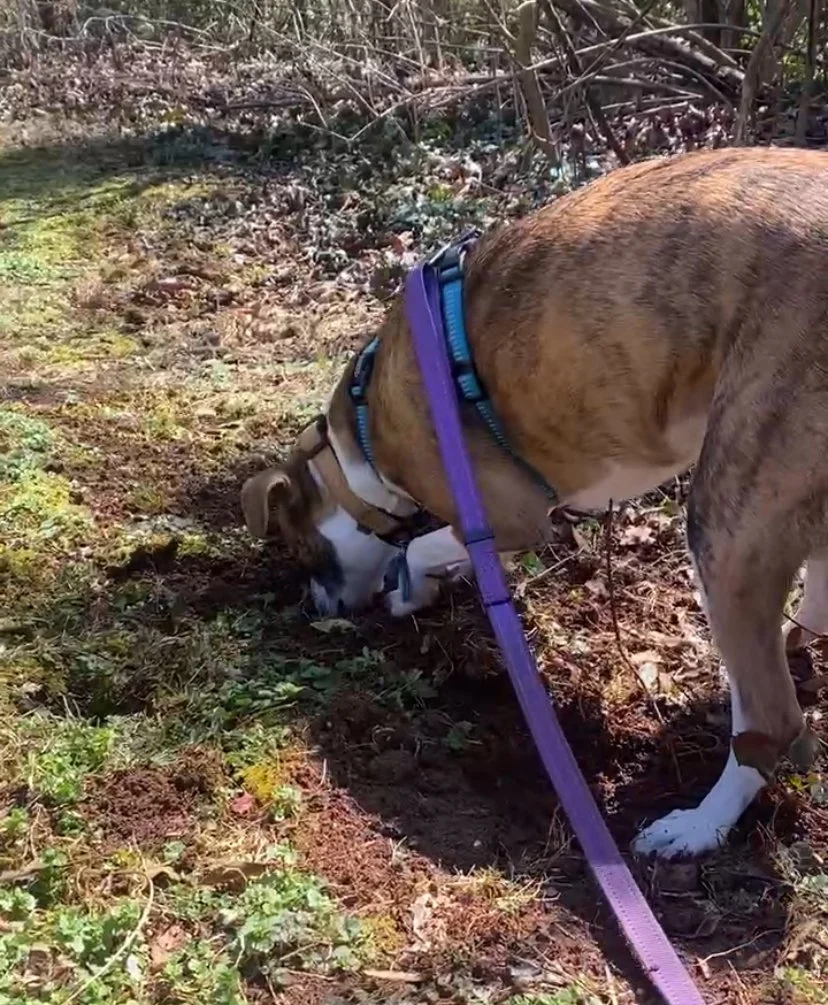
Sox found fresh earth super fun to dig in.
Some breeds of dogs are more likely to dig than others. For example terrier breeds were originally bred to flush vermin out of the ground. It’s even in their name terra is the Latin word for earth! That’s not to say that all terriers are diggers and other breeds never dig. Breed isn’t all that we look at when it comes to behavior. But sometimes they do get the memo of what their ancestors were bred to do and it’s engrained into who they are as a dog.
If your dog is sniffing the ground in a sort of a pattern and then they start digging, it’s probably because they are hunting something.Some dogs will dig and nuzzle at the ground to try and bury something like their chew bones. I’ve seen dogs do this inside a lot under blankets or pushing their toys on top of chews that they want to find later.
Several dogs that I worked with in the past did a lot of digging to make laying spots more comfy. Two labs in particular would dig in their sand pit to get to the cooler sand in the summer and one hound mix would dig so hard at her dog bed that we would joke that she was just digging to China to go to sleep.
Trying to escape can be a really unsafe reason dogs are digging. Usually the result of the escape is to gain access to something, whether that be a male digging out to find that female in heat that he can smell, or a dog that is panicking and trying to access safety elsewhere.
And lastly dogs may dig because they are bored and they need something to do.
Okay, so now you know why dogs dig. But it’s still annoying and potentially dangerous, so what do we do about it?
Should You Let Your Dog Dig?
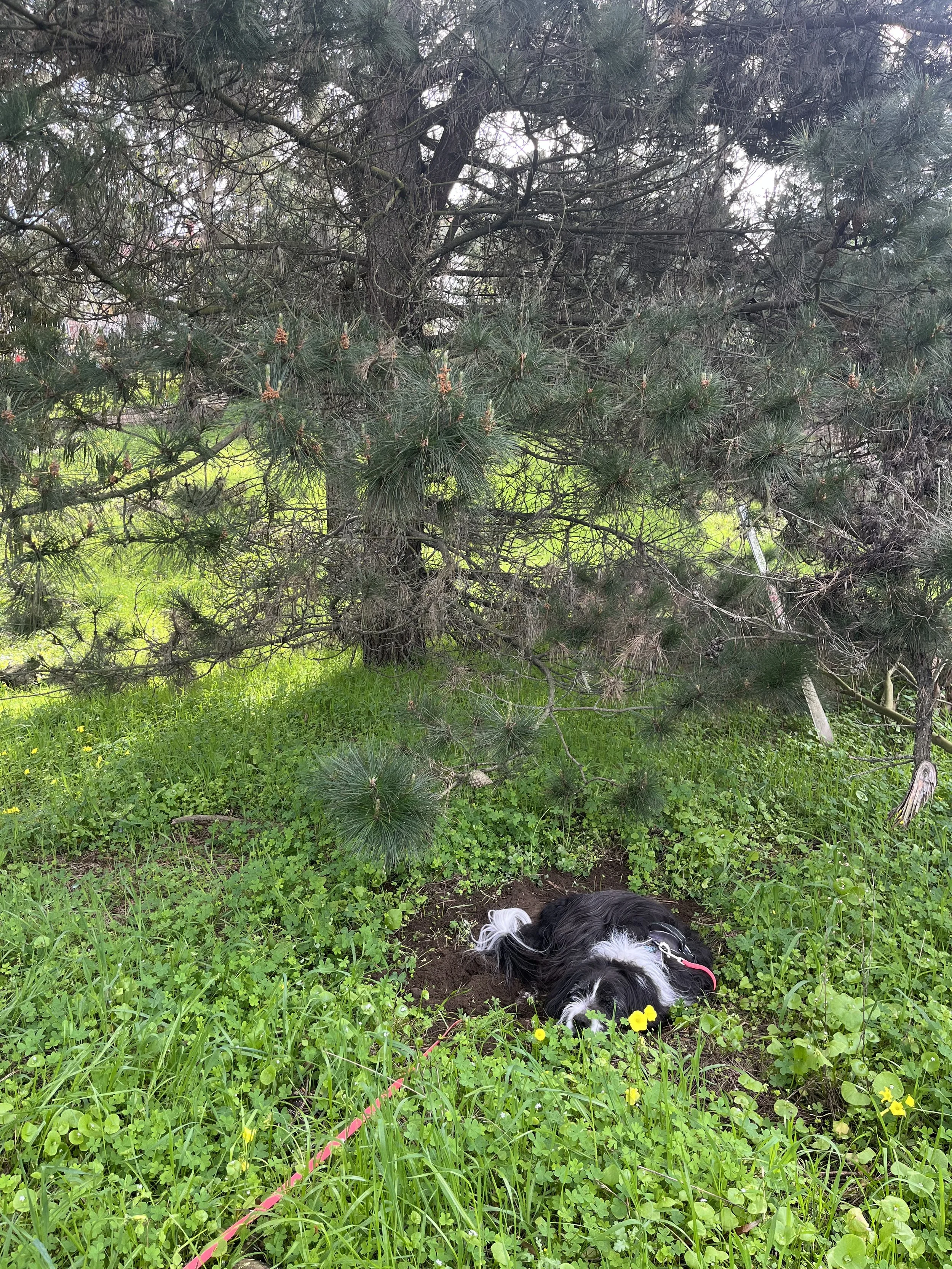
Barnaby likes to dig a fresh patch to lay in and cool down during his adventure days.
Before starting a whole training plan to stop your dog from digging, ask yourself these questions
Is anyone’s safety compromised by their digging?
What needs are they trying to meet?
Can I give them a safer place to do their digging that will meet that same need?
If I can’t, what other activities might fulfill those same needs?
Remember it’s ingrained in who they are as dogs, so the digging won’t get worse if you give them safe opportunities to do so. But if everyone (or every thing) isn’t safe, then the problem isn’t the digging itself, it's the end result.
How to Stop Destructive Digging
Step 1: Manage the “problem”
The first step to any good behavior modification plan is management.
Block off any areas in the yard that aren’t safe for your dog to dig and don’t leave them unsupervised while outside.
For dogs that like to escape, use things like chicken wire below the fence line, tarps or mesh to block visuals through fences, or even tether your dog away from the fence line.
You can do similar management inside the house if your dog likes to dig into certain furniture or carpets. Block access and don’t leave them unsupervised.
Step 2: Give Your Dog a Safe Place to Dig
Once you’ve started your management strategy, you can then go back to your list of questions and start finding ways to let your dog dig safely.
Hunting or burying treasures
Outdoor dig pits
For dogs that like to hunt or bury their treasures you can build an outdoor dig pit, similar to a kid with a sandbox. Choose a designated space in your yard and fill it with dirt, sand, mulch, or any other substrate safe for your dog. Hide their toys, chews, or treats in the dig pit for them to find. If you see them going to dig in another part of the yard, call them away from the undesired spot and lead them to their dig pit.
Substrate might be really important for them here. If they like the resistance of harder ground and grass you might want to find a substrate that you can compact more. If they go for looser ground, finding a softer substrate like top soil or sand might be a great option.
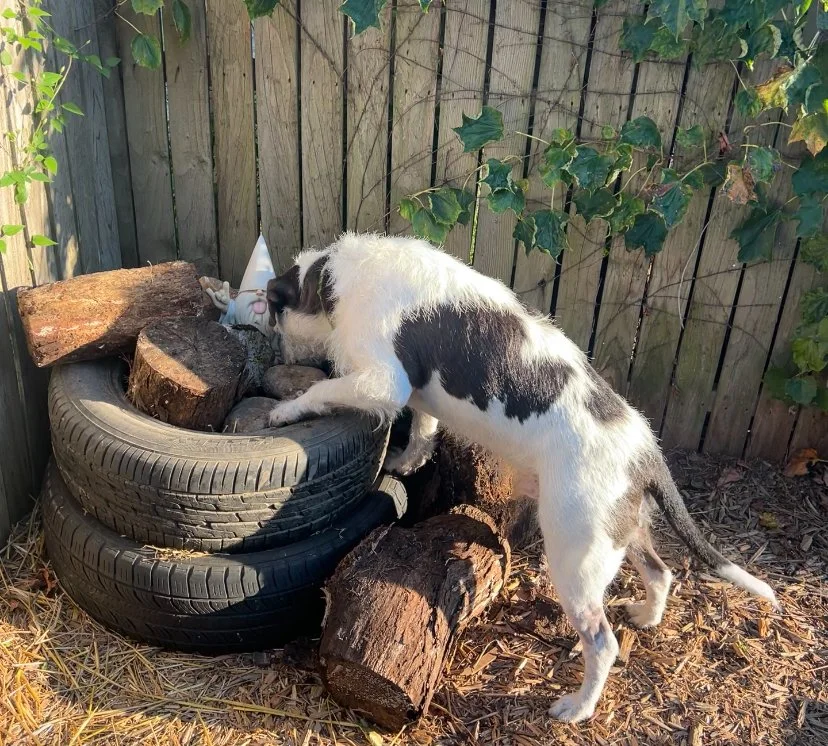
Petey the wondermutt has a modified dig pit in his yard. He enjoys digging at logs and haybales.
Indoor dig pits
Save the mess for outside, and use materials around your house for an inside dig pit. This can be anything from those ball pits you can buy online, or a pile of dirty laundry that you hide toys and treats in.

Tigerlily enjoys searching for treats in the ball pit at our Fear Free vet clinic.
Cozy spots to lay
If your dog tends to run hot they make cooling mats for dogs that you can pop into the freezer and then put either directly on the ground or on a dog bed. Elevated dog beds with mesh also can allow for air to flow under your dog keeping them cooler. And if they are outside ALWAYS provide them some sort of shade to get out of direct sunlight.
Providing different materials and bed types for dogs that dig right before sleeping can protect your furniture. I go to local thrift shops and buy used blankets and towels that are designated dog linens and I’ll stack them up in the corner of the couch so my dog can make herself a little nest while we’re watching t.v. They also make cave beds for dogs that like to bury themselves.
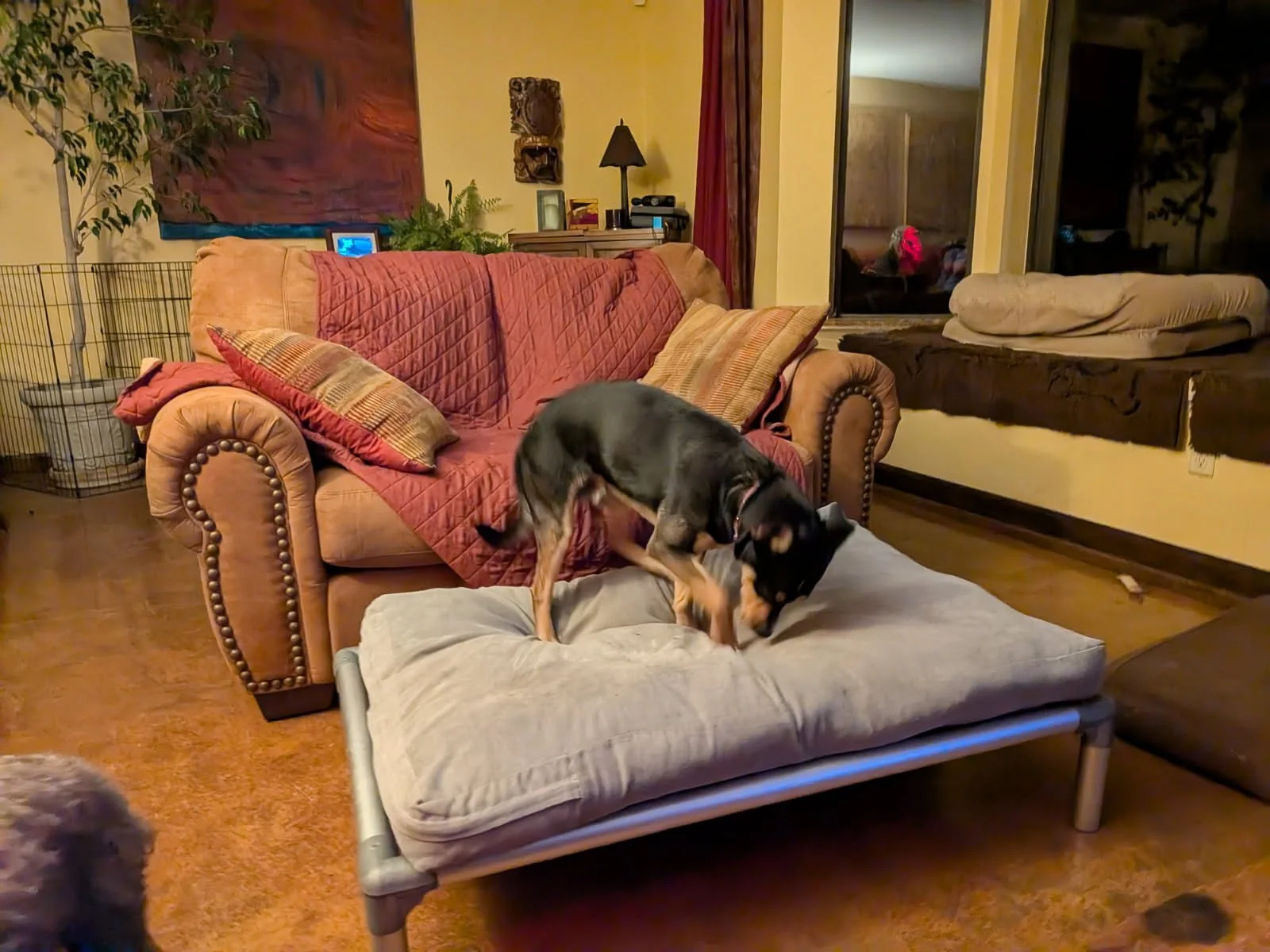
Beth Sharp's foster pup Chevy digs at his giant pillow to make the most comfiest spot to rest!
Escape artists and bored pups
Mental and physical exercise
If your dog is bored and is either just digging holes or digging to actively get out and find fun, playing different activities in YOUR yard will meet their need AND make staying at home more fun. Some ideas are:
Flirt pole
Fetch
Tug
Homemade obstacle courses
Scent work
Scatter feeding of treats or kibble throughout the grass
Hunting for a scent or object that you’ve hidden.
Escaping for other reasons
An option to neuter is suggested if your intact male is trying to get out to find a female in heat. Or stick to your management strategy of tethering or supervised yard time.
For dogs that are digging due to panicking behaviors such as separation anxiety, please seek out a qualified behavior consultant to give you a specific plan for your dog.
When your idea didn’t work.
Every day I ask my dogs “what do you want?” and “why are you the way you are?” Unfortunately they never answer me and I can only make assumptions. My assumptions are sometimes educated guesses based on past history and their body language signals. For those times that my assumptions have been wrong I have to try again.
The same idea goes for when your digging management or appropriate outlet doesn’t work. You can first ask your dog “WHY ARE YOU?!” and when they don’t answer, look at what you’ve tried to do and what they are doing instead. Then make adjustments and try again.
Needs are always changing. Which means your plans might have to be adjusted depending on time of year, your dog's age and health status, or when you have life changes. Remember, when all of our needs are met-we are all better for it.
If you need help trying to figure out why your dog is digging or how to help meet that need I’m here to help. Reach out and let’s build a plan together!
Hi! I’m Beccy and I’m a professional dog trainer with almost 15 years of animal training experience. I use positive reinforcement and fear-free methods to help dogs and their humans build skills, confidence, and lasting behavior change. My goal is to create a stress free life for you and your dog. I offer in-home training in Maryville, TN and surrounding cities throughout Blount, Sevier, Knox, and Loudon Counties. Online training is available for clients outside of East TN.
